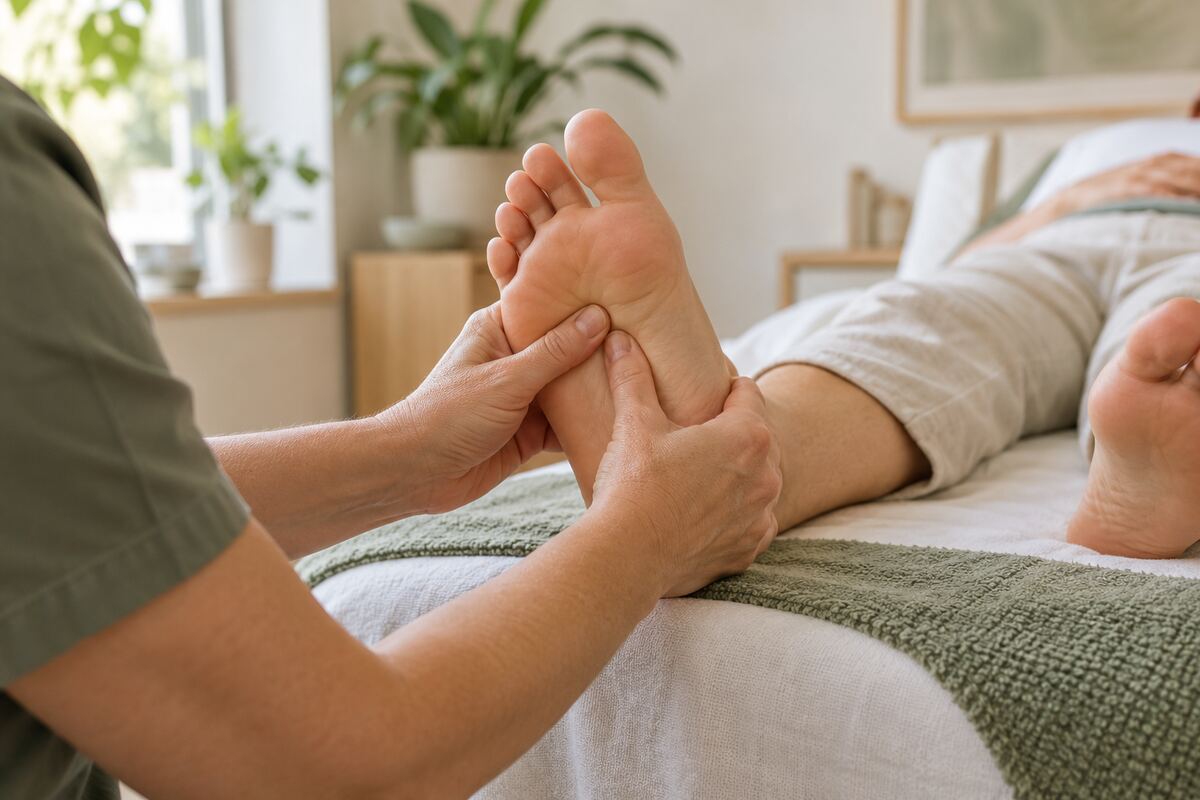

Your feet carry you through every day, yet they rarely receive focused care. Reflexology is a complementary wellness practice in which gentle, deliberate pressure is applied to specific areas of the feet or hands.
Many people use reflexology to relax, slow down and reconnect with their bodies. Research has also explored its possible effects on stress, sleep, fatigue and pain. Some studies have reported encouraging results, but the overall evidence remains mixed and more high-quality research is needed.
Reflexology should therefore be understood as supportive wellness care rather than a treatment or cure for a medical condition. Here are seven potential benefits that may help explain why people include it in their self-care routines.
1. Provides dedicated time for relaxation
A reflexology appointment creates a quiet period in which you can rest without having to perform, plan or respond to outside demands. The rhythmic application of pressure, calm environment and focused attention may help some people feel more settled.
Research has examined reflexology for anxiety and stress in several populations. Although some studies have reported improvements, differences in study design and quality mean that firm conclusions cannot yet be made.
2. May help reduce the experience of stress
Stress often presents physically through muscle tension, restlessness, shallow breathing, fatigue or difficulty slowing down. Reflexology does not remove the causes of stress, but the experience of safe, comfortable touch may encourage relaxation and greater body awareness.
Some people describe feeling calmer or more grounded following a session. This is a personal response rather than a guaranteed medical effect, and experiences vary from person to person.
3. May support a more restful bedtime routine
Reflexology has been studied in relation to sleep. A 2011 systematic review and meta-analysis found promising results for sleep, fatigue and pain, but the authors also noted substantial differences among the included studies.
A session later in the day may help establish a transition between activity and rest. Reflexology should not be presented as a treatment for insomnia or sleep disorders, but it may be a comfortable addition to a broader sleep-support routine.
4. May help some people experiencing fatigue
Fatigue can be connected with stress, disrupted sleep, demanding schedules, recovery, medication effects or an underlying medical condition. Research has explored reflexology as supportive care for fatigue, with some studies reporting improvement.
However, persistent or unexplained fatigue should be assessed by an appropriate healthcare professional. Reflexology may complement medical care, but it should not replace investigation or treatment of the underlying cause.
5. May influence how some people experience pain
Some studies have investigated reflexology for pain in supportive and palliative-care settings. A 2020 systematic review found some low-quality evidence of reduced pain compared with an active control, but the research was too inconsistent to support firm clinical recommendations.
Reflexology may still be appealing to people who want a gentle approach that does not require full-body treatment. It should be used alongside, rather than instead of, appropriate assessment and medical or rehabilitative care.
6. Offers focused care without full-body massage
Not everyone wants or can comfortably receive a full-body massage. Reflexology concentrates primarily on the feet and can generally be provided while the person remains clothed.
This may make it a comfortable option for people who prefer limited touch, want a quieter session or simply enjoy focused foot care. Pressure and positioning can be adjusted throughout the appointment according to comfort and preference.
7. Encourages body awareness and intentional self-care
A reflexology session gives you an opportunity to notice areas of sensitivity, tension and comfort in your feet. These observations do not diagnose conditions in other organs or parts of the body, but they may help you become more aware of how your feet feel after work, exercise, prolonged standing or everyday activity.
Making time for care can also reinforce a practical habit of rest. For many people, the value of reflexology lies in this combination of comfortable touch, focused attention and permission to pause.
What reflexology cannot establish
Reflexology is traditionally based on maps that associate areas of the feet and hands with other parts of the body. These proposed connections have not been scientifically established as a method of diagnosing or treating disease.
Reflexology should not be used to diagnose inflammation, circulation problems, organ dysfunction, nervous-system disorders or other medical conditions. It is also not a substitute for medical assessment, prescribed treatment, counselling, physiotherapy or other necessary healthcare.
What to expect during a reflexology session
Your session begins with a brief discussion of your comfort, preferences and wellness goals. You will usually remain clothed while focused pressure and massage techniques are applied to the feet.
The pressure should remain comfortable. You can ask for the pressure, positioning or technique to be adjusted at any time. Every session is adapted to the individual rather than following a rigid one-size-fits-all routine.
Is reflexology right for you?
Reflexology may be worth considering if you are looking for a gentle, focused wellness session that supports relaxation and intentional rest. Speak with your healthcare provider before booking if you have a recent foot injury, unexplained swelling, infection, blood-clot concerns, significant loss of sensation or another condition that may affect whether foot treatment is appropriate.
At Metabodyworks, reflexology is offered by Rina Thibault, a Holistic Wellness Practitioner trained in reflexology, Reiki, therapeutic Thai massage and restorative practices. Sessions are personalized around your comfort, preferences and wellness goals.
Research and further reading
- National Center for Complementary and Integrative Health: Reflexology
- Lee J, et al. Effects of foot reflexology on fatigue, sleep and pain: a systematic review and meta-analysis. Journal of Korean Academy of Nursing. 2011.
- Candy B, et al. The effectiveness of aromatherapy, massage and reflexology in people with palliative care needs: a systematic review. Palliative Medicine. 2020.
- Song HJ, et al. Effect of self-administered foot reflexology for symptom management in healthy persons: a systematic review and meta-analysis. Complementary Therapies in Medicine. 2015.
- Song HJ, et al. Self-administered foot reflexology for the management of chronic health conditions: a systematic review. Journal of Alternative and Complementary Medicine. 2015.
This article provides general wellness information and is not intended to diagnose, treat or replace advice from a qualified healthcare professional.