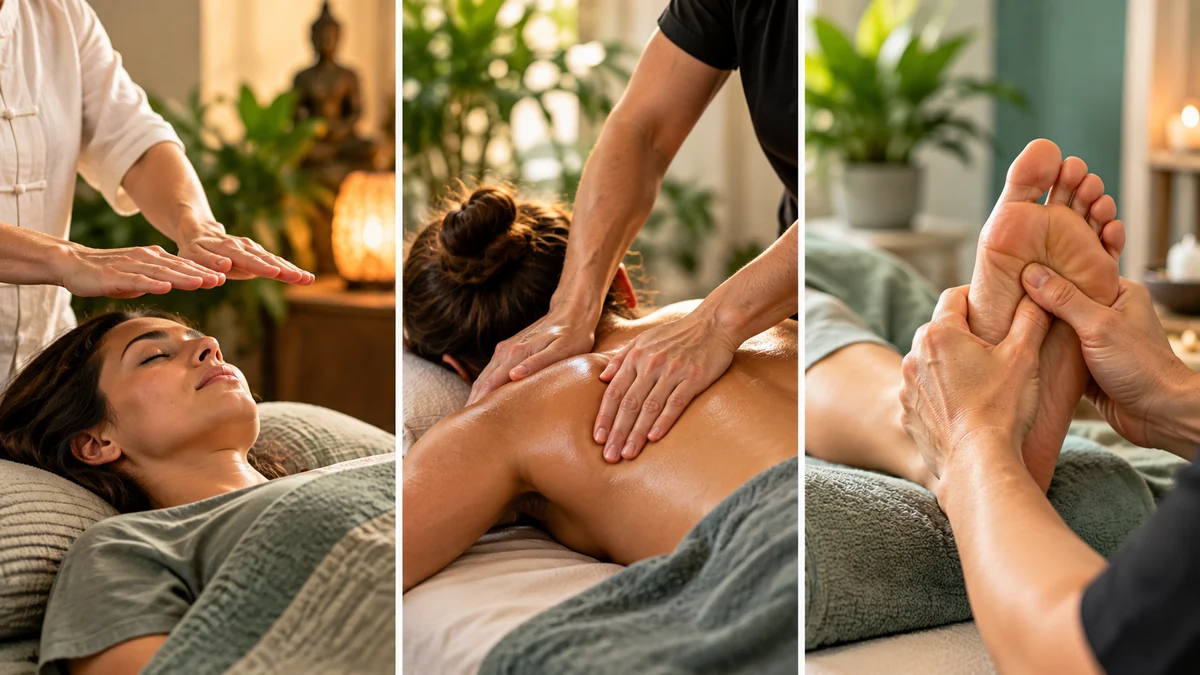

When you're carrying stress, recovering from injury, or simply trying to feel more like yourself, three words keep coming up in the same breath: Reiki, massage, and reflexology. All three promise relief. All three feel deeply calming. And all three look - at a glance - kind of similar.
The truth is they are very different pieces of a whole-person approach. Reiki works with energy. Massage works with muscles and fascia. Reflexology works through reflex points on the feet, hands, and ears. None is "better" than the others - the right choice depends on what your body is asking for today. This guide compares Reiki vs massage vs reflexology side by side so you can walk into your care journey with clarity, not guesswork.
The short answer first
- Reiki is gentle, non-invasive energy healing. No touch is required. Best for stress, burnout, emotional overwhelm, and nervous system reset.
- Massage is hands-on bodywork. Best for muscle tension, chronic pain, injury recovery, and mobility.
- Reflexology is focused pressure on reflex points. Best for sleep, circulation, fatigue, and overall energy balance.
If you can't choose, that's exactly the point of a full-service destination - you may use different ones in different seasons of life, or layer them within the same care plan.
Reiki: Energy healing for the nervous system
Reiki is a gentle, non-invasive practice that supports deep relaxation and emotional clarity. A practitioner holds or hovers their hands over your body, supporting your natural energy flow without manipulating muscle or tissue. There is no force, no stretching, and no pressure - just a calm invitation to rest.
This makes Reiki one of the most accessible modalities. No prior experience with energy work is required; no undressing, no oil, no joint movement. It is ideal for times of high stress, burnout, recovery, or major life transition, when the nervous system needs a signal to shift from anxiety down into rest.
Because it works primarily on the nervous system and emotional terrain rather than the physical tissue, Reiki is a natural first choice for someone who feels wired, drained, or emotionally heavy.
Massage: Therapeutic bodywork for muscles and mobility
Massage therapy at MetaBodyworks is focused on restoring movement, reducing pain, and supporting the body's natural healing capacity. Whether you're managing chronic tension, recovering from an injury, or living with postural strain, a therapeutic massage blends clinical assessment with hands-on techniques to improve circulation, mobility, and how your nervous system is regulated.
Two styles frequently come up:
- Registered Massage Therapy (RMT) - evidence-informed, client-centered care that addresses specific pain and functional goals through tailored hands-on work.
- Therapeutic and Holistic Massage - the same benefits plus an understanding of how stress, emotions, and lifestyle patterns show up in the body, so release feels physical and emotional at once.
Both are the "body" in the energy-body-reflex conversation. If your discomfort is physical - a stiff neck, sore shoulders, an old injury that still nags - massage is generally the modality to start.
Reflexology: Reflex points for circulation and balance
Reflexology works with specific reflex points on the feet, hands, or ears that correspond to systems throughout the body. It is a focused, practical practice: gentle pressure on these points supports circulation, nervous system balancing, and overall vitality while drawing you into deep rest.
Many clients turn to reflexology for sleep issues, stress, digestive concerns, digestion, and energy balance. It's grounding, nurturing, and works "from the feet up," making it an excellent companion to massage or a standalone reset when you want focused, body-wide support without a full-body session.
If you're curious about precision, Meta East's Infrared Foot Reflexology (ITR) layers real-time thermal imaging over classic reflexology, letting you see before-and-after heat patterns that show circulation, inflammation, and stress in the feet - where ancient practice meets modern insight.
Reiki vs reflexology: which is more relaxing?
Reiki and reflexology are sometimes the two most confused, because they can both look calm and are both low-pressure. The differences come down to mechanism:
| Reiki | Reflexology | |
|---|---|---|
| Primary focus | Energy and nervous system | Reflex points and physical areas |
| Touch | Minimal or none | Gentle, deliberate pressure on feet/hands/ears |
| Best for | Stress, burnout, emotional clarity | Sleep, circulation, fatigue, energy balance |
| Feels like | Deep mental and emotional | Grounding, physical de-tension |
If your struggle is more in your head and heart (worried, wired, emotionally overwhelmed), Reiki is a beautiful start. If it shows up physically (heavy feet, poor sleep, low energy, tension we carry in the body), reflexology tends to be the more direct path.
Massage vs reflexology: targeted versus whole feet
The gap between massage and reflexology is clearer. Massage treats the entire body - muscles, fascia, specific areas of pain and limitation. Reflexology is targeted, working reflex points as a focused map to the rest of your systems. Neither replaces the other; massage addresses the tissue where discomfort actually lives, and reflexology supports the connected systems and their balance. People who feel knotted locally reach for massage; people who feel broadly run-down, tired, or sleep-deprived often appreciate reflexology.
How to choose: a simple decision guide to choose the right one
Ask three questions:
- Where do I feel it? Local, physical tension (neck, back, tight hips) → massage. Whole-body tiredness or poor sleep → reflexology. Emotional overwhelm or burnout → Reiki.
- How much touch do I want? Ready for deeper hands-on work → massage. Prefer light, respectful pressure → reflexology. Prefer almost no touch → Reiki.
- What am I trying to reset? Nervous system and emotions → Reiki. Movement, pain, mobility → massage. Vitality, circulation, sleep → reflexology.
When in doubt, don't force a single winner. Metabodyworks Massage Therapy and Wellness brings all three - and more - under one roof, so you can start with whichever speaks to you and build from there.
You don't have to pick just one
There's no wrong answer here. Many people move through these therapies over time as their needs change: Reiki to reset after a stressful period, a massage series to resolve a stubborn knot, reflexology to support better sleep and energy. Because the modalities speak so differently to the body system, they can support each other beautifully - and that's the fuller, freer definition of holistic wellness.
If you're aren't sure where to begin, the warm, knowledgeable team at MetaBodyWorks is happy to help you choose. Book a session that feels right to you, and let your body show you what it needs.